Sintech Computer
Role: Full Stack Developer • Year: 2025
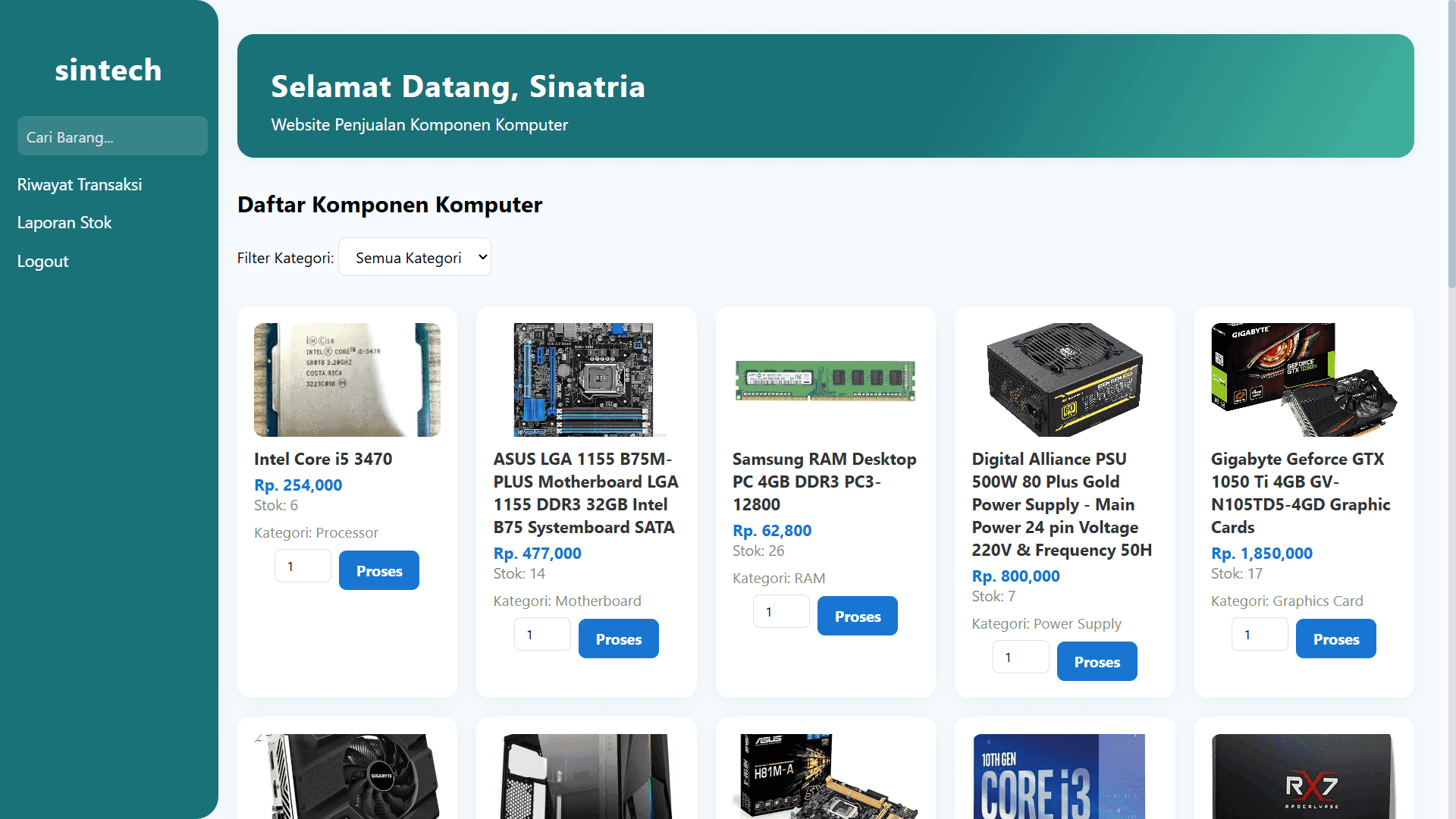
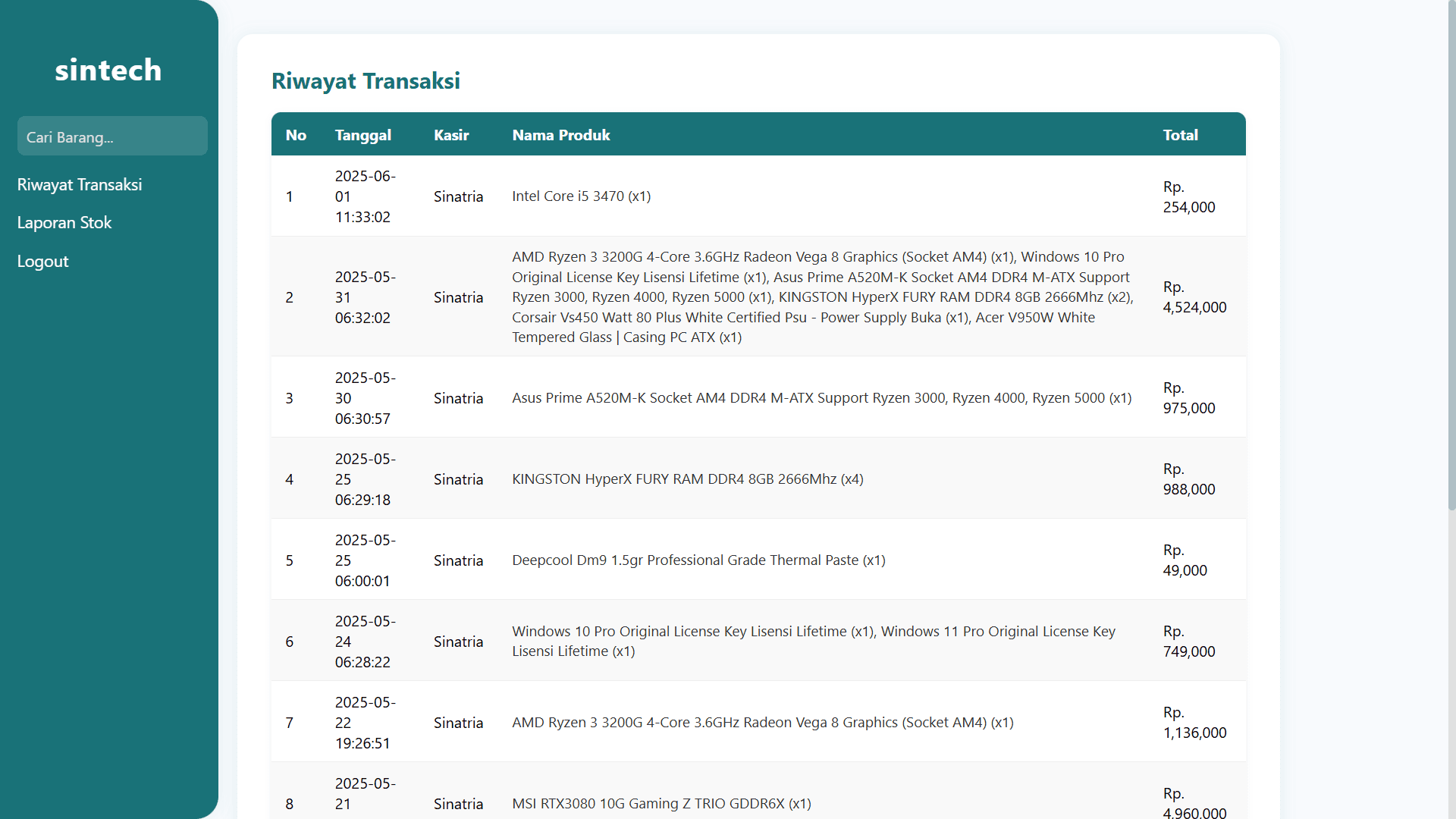
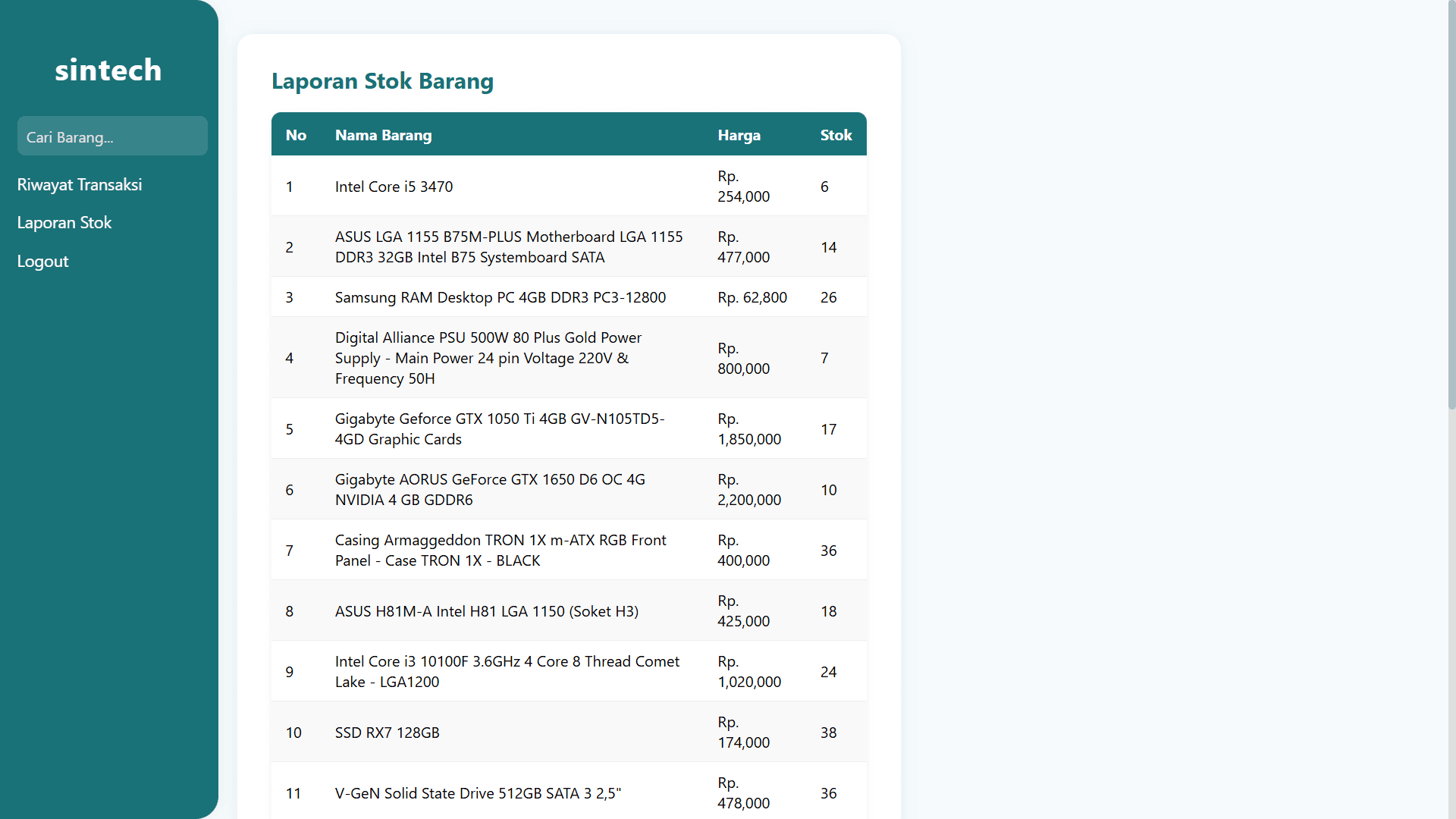
I built Sintech Computer to manage inventory and cashier sales for computer hardware shops. Built with PHP and MySQL, it handles hardware tracking across components (CPUs, GPUs, RAM, Motherboards), automates cashier checkouts with stock deductions, serves internal JSON API endpoints for Chart.js sales analytics, and renders printer-ready thermal receipts.
Application Screenshots & Gallery
The Problem Context
Retail computer stores struggled with manual stock tracking across hardware categories, checkout calculation errors during peak hours, and lack of visual sales analytics.
The Engineering Solution
I built a web POS system featuring session cart management, category filtering, internal REST JSON endpoints for Chart.js sales visualization (daily & categorical revenue trends), role-based access control (Admin & Cashier), and printer-friendly thermal receipts.
Client Interface
HTML5 / ES6+ Fetch API / CSS3POS Server Logic
Native PHP & Session Cart EngineInternal REST API
JSON Endpoints for Chart.js AnalyticsRelational DB
MySQL Data StoreReceipt Engine
Thermal Receipt Layout (@media print)Implementation Highlights
Designed relational MySQL database schema for products, categories, transactions, and user accounts.
Engineered session-based authentication and role-based access for Admin and Cashier accounts.
Developed internal REST JSON endpoints feeding Chart.js line and bar charts.
Built session POS checkout system calculating change in real time with automatic stock deductions.
Created thermal receipt layout optimized for receipt printers via CSS print media queries.
Measurable Results
- Automated cashier transaction calculations and inventory stock deductions.
- Provided real-time sales trend analytics and best-selling hardware reports.
- Generated print-ready thermal receipts immediately after transaction checkout.
Key Lessons Learned
- Exposing lightweight internal JSON endpoints for frontend charts keeps page loading fast.
- Modular PHP file structures simplify code maintenance when separating views, logic, and data handling.